How is your heart?

My dear friend Dr. Lenna Liu is a pediatrician at Odessa Brown Children’s Clinic which serves diverse & predominantly lower income families in Seattle. She is also a mindfulness and meditation teacher. For the past two months she and the rest of her colleagues and staff at the clinic and hospital have been working heroically to save lives. They have been giving far beyond their normal capacity for work and heartbreak. To help keep everyone going, Lenna sends out an email message every week. She shared this one with me. I asked for her permission to post it here.

How is your heart?

It is so inspiring to work in a clinic full of superheroes–those of you feeding our community, supporting undocumented families, finding face shields, taking care of the sick while putting yourself at risk, calling and talking to families all day, leading us in this most challenging time.


And at the same time it is tremendously humbling. Not only do I think of you all, but I think about the healthcare providers in the ERs and ICUs and the first responders rushing into homes. I often feel guilty that I’m not doing enough, that I should be doing more, that i’m not making enough of a difference.

It’s been said:
“People will ask years from now how did you show up during this moment in the world?”
That can feel like both an inspiring and a daunting question.

It has reminded me of a famous teaching from Thich Nhat Hanh, Buddhist monk and peace activist.
A student asked him:
“… I am an activist and I care very deeply for the world. Sometimes I feel a lot of despair about what’s happening in the world around us, in terms of violence, poverty, and environmental destruction. What practices would you recommend for those of us who…are in despair about the suffering of the world?”

Thich Nhat Hanh said this:
Imagine a pine tree standing in the yard. If that pine tree were to ask us what it should do, what the maximum is that a pine tree can do to help the world, our answer would very clear: “You should be a beautiful, healthy pine tree. You help the world by being your best.” That is true for humans also. The basic thing we can do to help the world is to be healthy, solid, loving, and gentle to ourselves.

So anything you do for yourself, you do for the world. Don’t think that you and the world are two separate things. When you breathe in mindfully and gently, when you feel the wonder of being alive, remember that you’re also doing this for the world. Practicing with that kind of insight, you will succeed in helping the world. You don’t even have to wait until tomorrow. You can do it right now, today.

I am grateful for this reminder.
Like the pine tree, when a baby is born, she is worthy just in her being. She doesn’t have to DO anything. She has the full love of her family and her community just as she is. She contributes to the world just as she is.

So for those of you who have not stopped your caring, your giving, your selfless and noble efforts during this crisis, please remember that we need you in your fullest being, your fullest HEALTHIEST being. Please pause and take the time to eat, sleep, rest, exercise, nourish your spirit, and be loving and kind to yourself. It is not selfish to care for yourself, it renews your capacity to be your fullest self.

And for those feeling like we are not doing enough or in those moments you feel this way, remember that we are enough just in our being ourselves. Being parents, partners, daughters, sons. Being the voice that admits to feeling overwhelmed so that others can know they are not alone. Being the one who cries so that others feel permission to cry as well. Being the one who sings off key and makes everyone laugh. Every voice matters. We each contribute to creating a rich tapestry of humanity enduring this moment together.

And a reminder of the obvious, we are in a world pandemic. The enormity of suffering and healing needed is beyond any one of us. We each need to find our own balance of doing and being. And by finding that balance, we are being the pine tree and contributing to the forest of healing that this world needs now.

–Lenna Liu, MD, MPH

Seattle, Washington

Photo by eberhard grossgasteiger on Unsplash

Writing Out the Wait

I live in Maine, a state near the bottom of the list of number of cases of Covid 19. Even though 90% of the cases are in my city, I do not yet know anyone with the illness. It’s still easier for me to worry more about the fact that my beloved beach has closed than to be aware of the fact that the world just a few hours away from my door is coping with disaster. Up here my biggest challenge so far is screen fatigue from doing my job on ZOOM. Last weekend I got to revel in the pleasures of being home: doing a jigsaw puzzle in the morning sunshine, organizing the basement in the afternoon, and making pizza for dinner before the delicious pleasure of laughter with my family while we watched The Blues Brothers before bed.


And yet, even when I do not have the news turned on, even when I try to be fully present with what is happening in my own life, I cannot escape the larger reality. In my mind is always the knowledge that devastation is spreading across the world, that my friends in New York, Seattle, Boston, New Orleans and Bangkok are struggling. No matter what I’m doing, every now and then, I hear the phrase Covid Nineteen loud and clear in my mind. The voice is flat, emotionless, but persistent. It is followed by the listing of facts: people, no different from me except for where they happen to live, have lost their jobs; parents are facing the possibility of themselves and their children going hungry; in New York, so many are dying so fast that refrigerator trucks have been deployed to transport the bodies; and perhaps most heartbreaking, people are dying alone.


So throughout the day as I move through my home, nowhere to go, nothing to plan, just time to appreciate the people I love and the life we have, I wonder, how can I possible be enjoying myself, how can I be pleased with the new pace of life here in my own little world when so many people are suffering? It’s a strange place to be psychologically. Beyond trying to stay connected to those I love, and maybe start sewing masks, it seems to me my job now is to batten down the hatches and wait.

In my last post I promised to offer a new tool for moving through this crisis. I encouraged people to meditate. Meditation is a way to slow down enough to witness our own discomfort up close. In meditation, I have found that one of the most difficult things for me to do psychologically is to hold what seem to be conflicting realities at nearly the same time. It is uncomfortable because living with what feels paradoxical takes away any sense of psychological security I have so carefully and unconsciously created year after year, day after day, moment after moment.

As a human being, I have a habitual need to think I can make myself feel safe by imagining I know what’s ahead, by living as if illness and death were not always a breath away. By constantly planning my next move, my next task, my next vacation, I keep straining forward into the future rather than staying with what is present.


When I stop moving, when I sit still, I can see more clearly not what I want my life to be, but the reality of what it is. This can be emotionally upsetting. Yet it can also be a huge relief. When I stop and see what’s actually going on, I can put down the constant burden of illusion I carry. I can stand up a little taller without its weight and look around from a new place. I can see my situation more clearly.


Right now, clear-sightedness is essential. We are in a time that demands each of us be able to function with full access to our best intelligence. And we can only think well when we recognize what’s actually happening around us. Right now, that is hard. When things are confusing, painful or sad, we want to cling even tighter to the illusions we’ve created. When we fear that our safety and livelihood might be taken away from us, our tendency is to try to maintain our distance from what threatens us. Right now many gun stores are overwhelmed with business. Online ammunition site Ammo.com reported a recent spike of 70 percent in sales. Almost all of us are worrying about the future, putting energy into planning to protect what we have. Alcohol (the kind you drink) sales are climbing, another indicator that we are trying to numb ourselves to the terror at our doorstep.


Constantly running away makes it hard to think clearly, constantly denying our own pain makes it hard to know what to do. But allowing ourselves to actually experience, embody and express the emotions that carry so much energy in our bodies, leaves us feeling calmer and clearer. We need to recognize, allow, feel and release what we try to deny in order to diffuse the negative power.


Writing in a journal, like meditating, can makes space to more clearly experience what is. When we journal, when we write without regard to audience or logic or accomplishment, when we write with the same attitude with which we meditate, with a sense of non-judgmental allowing, we can begin to know ourselves better, to see our situation more clearly. And often, when we do this, when we see how challenging things are in our lives and the current situation, we begin to find a sense of compassion arising. We look at ourselves as we might look at a friend who is going through something hard, and we might be able to say to ourselves, “Wow, that’s really hard. No wonder you are struggling. I’m sorry it’s like this right now.”


Jiddu Krishnamurti writes, “The highest form of human intelligence is to observe yourself without judgment.” That’s what I strive for when I write. I try to do nothing more than release what’s troubling me, record my own suffering by writing it onto the page. When I do this, I start to see myself from a new vantage point. By noting (as I might in meditation) the images of illness, death, and fear that haunt me, I begin to access a compassionate, patient part of me. This part can hold my worry and witness my feelings of pain enough to allow space release, for healing.

And then I can move on. By writing down what’s hard, I let it go. It no longer cripples me with the drag of its insistence to be noticed. When I treat myself with enough care to slow down and allow what’s happening inside me to surface, I can release it. And then, I get up from my work with a sense of spaciousness in my mind and heart, better able to think about how to serve myself and my world at this time.

— Catharine H. Murray, Author Now You See the Sky

Surviving Social Slow Down: First of three Ideas

Some of us are having a hard time. Parents with children home all day have to suddenly negotiate a new family system that may demand more time and attention than before. Workers furloughed with no return date in sight are wondering how to keep a roof overhead and food on the table. All of us have to find ways to stay connected to those we love when we cannot touch each other. Many of us are afraid of illness for ourselves, those we love and those we’ve never met.

We are facing new ways of being, working and communicating, new situations that challenge our minds and our hearts. And for some of us, this can be very hard at times. Many of the places we used to go to find solace or camaraderie have been taken away from us. A close friend’s warm shoulder, a cold beer at a cozy bar, our favorite latte at a lively coffee shop, a bargain at a stylish store, none of this is accessible now.

So rather than avoiding our inner discomfort or having it soothed by the distraction of a friend or a drink or an ice cream or pair of earrings, we now have the very uncomfortable job of being with our own feelings. When there is no where to rush off to, we might notice vague feelings of fear or dread or boredom or loneliness rising up from the places within us we can usually keep out of sight.

There is always the TV, the fridge, the internet and the endless work of home, so we could keep hiding, keep busy, keep ourselves from hearing the insistent voices inside that ask for our attention. But after a while, screens begin to feel less inviting, food loses its appeal, chores exhaust us, and we find ourselves, again, alone with ourselves.

This can be a hard place to be. But the good news is, it can also be a deeply nourishing place to be if one makes the time and effort to pay attention. If we can, rather than flee from our discomfort, sit still and invite it in, we may find some powerful learning takes place, some healing we didn’t even know we needed.

It can be helpful, perhaps essential, to approach our difficult feelings with the clear sense of a container. A container both in terms of time and space can give us the reassuring sense that we don’t have to sit in these difficult places forever, that we will enter into contact with the thoughts and feelings, recognize and allow them, let them be transformed by our loving presence, and then we will move back into the present. So for the three methods I will describe over the next few days, the three containers, be sure to set a timer before you begin any of them. Start with just a few minutes, five or even one, whatever feels just at the edge of your comfort level. And as your practice becomes more regular, extend the period of time you work.

Meditation is one of the oldest forms of opening to the wise part of ourselves. It is a time-tested and effective tool for making space to increase peace in our lives and access inner wisdom. When we stop for a few minutes, sit still, and let the business of our minds settle into relaxed, loving, curiosity, we begin to see and feel what lies beneath the usual speed of our lives. If we do it regularly, we will have better access to our own intelligence.

When we meditate, we make room for thoughts and feelings to arise. And we lovingly receive whatever, I repeat WHATEVER, comes up. We let go of judgment, and we witness the mischievous mind’s offerings, saying to ourselves, “Oh that thought. That’s not me. That’s just the mind.” Or maybe we say to ourselves, “Sweetie, I’m so sorry that this has been here. That is hard. You’re doing a good job despite these thoughts that try to set you back, despite the difficult memories you’ve tried to avoid. Don’t worry. It’s only the mind. You’re just right. There’s nothing wrong with you.”

When the timer rings, acknowledge your good intention in sitting still, in pushing against a lifelong pattern of moving away rather than toward what’s hard. Be pleased with your efforts.

Doing something new that’s good for us, that we’re not used to doing, even for a few minutes once a day can be difficult. I think of each of my life-long patterns (procrastination, negative self-talk, reluctance to be in the spotlight) like a huge tanker moving across the ocean, steady with a tremendous amount of inertia. When I take up a practice to reverse the vector of the pattern, it’s like turning a that ship around. It doesn’t turn on a dime. It takes time and energy to slowly pull it off its old course and onto a better one. But once the turn begins, the inertia has shifted, and the ship is headed in the right direction at last.


After you do the work of nudging the ship in the right direction, reward yourself. Recognize your efforts for the hard work they are. Plan some pleasant, rewarding task for when you finish: water the plants, take a walk on the beach, cook your favorite soup, sit down to a bowl of ice cream.

Being with the parts of ourselves we have avoided for long periods of time is work that requires courage and patience. Be especially kind to yourself, knowing you are working hard to bring your best, most nurtured self to this challenging time.

Winter’s Gift

Grey skies, icy rain, shift in light from bright colors of autumn to darkness of winter, November has never been my favorite month. Winter chill pushes me inside and asks me to slow down to find warmth and peace in the quiet of home and hearth.

This would be fine, but for me there is often a thin line between cozy solitude, the cherished world of the artist, and cabin fever, a spiral into an internal world of painful emotions. And then there’s the holiday season when the cultural expectation of joy and bustling productivity as we buy more, cook more, eat more, socialize more can drive even the most even-keeled of us into a brush with the winter blues.

Where’s the gift in all this? What could I possibly appreciate about the coming darkness? When I am pushed closer into the mess of my psyche, I can only distract myself with to-do lists and snacks and squirrel-like activity for so long. Eventually the hard feelings find me. When they do, I have to do something. This is when I try to remember to make room to write, to find some relief. By writing down what’s hard, I gain some resolution, even if only partial, some wisdom, even if only a tiny bit. It’s so easy for me to forget again and again that whatever it is that’s making me cranky or angry or sad is usually a part of me that needs attention, that needs to be heard and understood. When I take the time to listen well enough to write about it, the pain, the negativity subsides.
The image that comes to mind is a jigsaw puzzle. Before I force myself to sit and write, it’s as if my inner world is like a puzzle when it’s first dumped out of the box. The pieces are piled up messy and without order. Some are upside down, colors and patterns completely estranged from each other. The sight itself can be unsettling. But if I sit and make the effort to turn over, examine, arrange and search, I will find patterns. I will find places where pieces fit, and I will experience that satisfying moment, that yummy thunk, when my fingers press the right piece into place. And after enough time, after staying with the frustration, not giving up, part of an image may emerge, or the frame for the whole, or a nice solid corner. And I feel better looking at that.
Even though, my puzzle will never be fully complete, writing gives me this sense of pleasing integration, and more. Writing out the pain, that in winter I can’t easily swim, run or hike away from, provides a clearer picture of my world. I gain a few much needed “aha!” moments that allow me to emerge from the work a kinder, more patient partner, mother, friend. And at this time of year, a little more light amid the darkness is what I need.

Some opportunities for working with me to bring the healing practice of writing into your life this winter:

January 11th, 1 – 3 PM
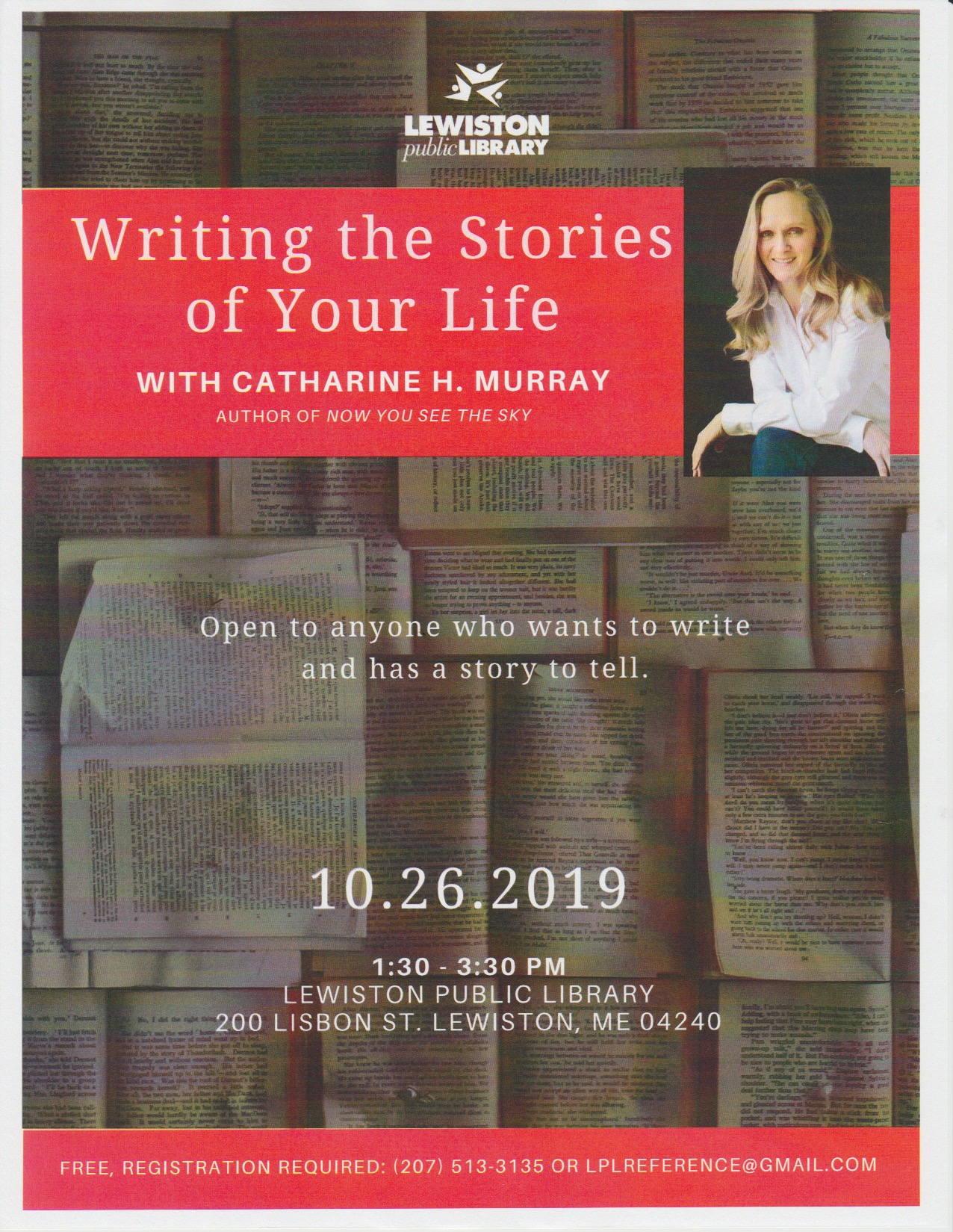
Writing the Stories of Your Life, a FREE Memoir Workshop
Thomas Memorial Library, Cape Elizabeth, Maine.
Open to anyone who wants to write and has a story to tell.

January 13th to February 17th
Writing To Heal, A Six-Week Series for Women
7:30 to 9:00 PM, Good Medicine Collective, Portland, Maine.
Instruction, support and writing time to help you establish a practice of writing in the safety and community of a small group.

January 26th 9 AM to Noon
Winter’s Deep Peace Practice: Yoga Nidra and Writing
Good Medicine Collective, Portland, Maine
A morning of restorative rest and soulful integration through guided yoga nidra and writing. Facebook Event

February 22nd, 10:30 AM to 12:30 PM
Writing the Stories of Your Life, a Memoir Workshop
Belfast Free Library, Belfast, Maine.  (Free to MWPA members. $5 for non-members)
Open to anyone who wants to write and has a story to tell.

I am also available for consultation and coaching if you prefer to work with me individually. We can meet in person or via Skype or Facetime. Contact me for more information: catharinehmurray@gmail.com

Now You See the Sky (Akashic Books, 2018)

When I Write

I write when it feels like I can’t do anything else, when I’m so hollow and hopeless that life seems pointless, nothing more than a series of worn out entertainments to distract myself from the present. At these times life feels like a roomful of toys I’ve tired of.

I write when I know, after years of experience, that even the jar of salted pistachios in the cupboard won’t save me from the present emotional discomfort I’m in, that checking the number of likes on my most recent Facebook post will only leave me feeling lonelier. I write when I am stuck with a feeling, when there is no way out.

When I write, I sit down and let the words out. I never try to be fancy. I simply say what I’m thinking which often can start out with something like “Life is stupid. This is stupid. I have nothing to say.” Not publishable material. But that is not the point. The point of writing when I feel so bad is only to get some relief.

After a short time, the voices in my head start telling me I’m wasting my time, laundry or dishes are more important . But I stick with it. I refuse to stop typing, refuse to get up from the bed or the chair where I’m working. This sitting still takes work, but I stay, and after a while my listening moves beyond the “everything is stupid” level of thought to what’s beneath it.

What’s beneath it usually something sad or hard or worrisome. I write about that. I complain to the page. I put my fears and sorrow into words, nothing literary, just honest. Short words. Half sentences. It’s all right. No standards for “good writing” at these times.

I keep going, through the recording of a hard moment in a close relationship, the misery of a painful childhood memory, the worries of being a parent. Inevitably, if I’m being honest in my writing, I hit a spot where I want to stop, where the staying with the pain becomes too hard. And that’s when I really want to stop. That’s when I feel I cannot write another word.

This, I have learned from experience, is the sweet spot, the turning point, the place where things get so hard, so utterly discouraging that to continue is akin to enduring physical pain. And it is right there that I force myself to keep writing, keep being a faithful observer, narrator, no more than the stenographer in the courtroom, no filters, just the words. If I do this faithfully for as long as it takes, the pain I’m describing, the unpleasant feeling I’m experiencing begins to lighten.

After those nearly insurmountable moments, I keep writing through what now becomes an easier place in the journaling journey. I feel myself coming to the end of the work, and I find what I say to myself in those paragraphs is leading me to an end point. The words may be a reflection. They may be a summing up. Or they may be the most tender part of the experience I’m rendering. I don’t try to make them any of that, but that’s where the dedication to the work takes me. And that is the relief. That is where I can stop and put down the pen or hit save on the screen and get up and walk away feeling lighter, even a little bit hopeful.

I think this calming, healing effect comes when I write because when I stop running away from the feeling, when I move fully into it, I create a psychic space for what I habitually recoil from. When I suffer, pushing away the thing that upsets me makes it expand to fill my internal vision, and I think am alone in all this pain and there is nothing other than this situation. When I write, I invite the difficult feeling in, I make room around the thoughts that are keeping me locked in suffering. Writing both allows the feeling to come to light and, at the same time, lifts me out of the direct experience of it by making me a kind of witness to myself. All of this allows some compassion toward myself and what I’m going through to emerge.

There are certainly other ways to heal. Meditation may lead to more lasting peace because the ego is less involved. Exercise creates endorphins and a generally better outlook on life. Being with friends reminds us of our connection to our human family and, if we are lucky, allows us the best medicine: laughter. As people with feelings, with tender hearts in a culture that revolves around an economy of avoiding feelings as much as possible, we need all these avenues to keep our hearts open and cultivate compassion for ourselves and others. But when I am alone in the dark, and all I can manage is to reach for the keyboard or the pen, I try to remember that it works.


October 21, 2019

Catharine H. Murray, Author of Now You See the Sky

Starting in Portland, Maine, January, 2020: Writing to Heal: A Six-week Series for Women


Free Memoir Wkshp LPL