Beth Ayotte’s work published in Writers Read Anthology

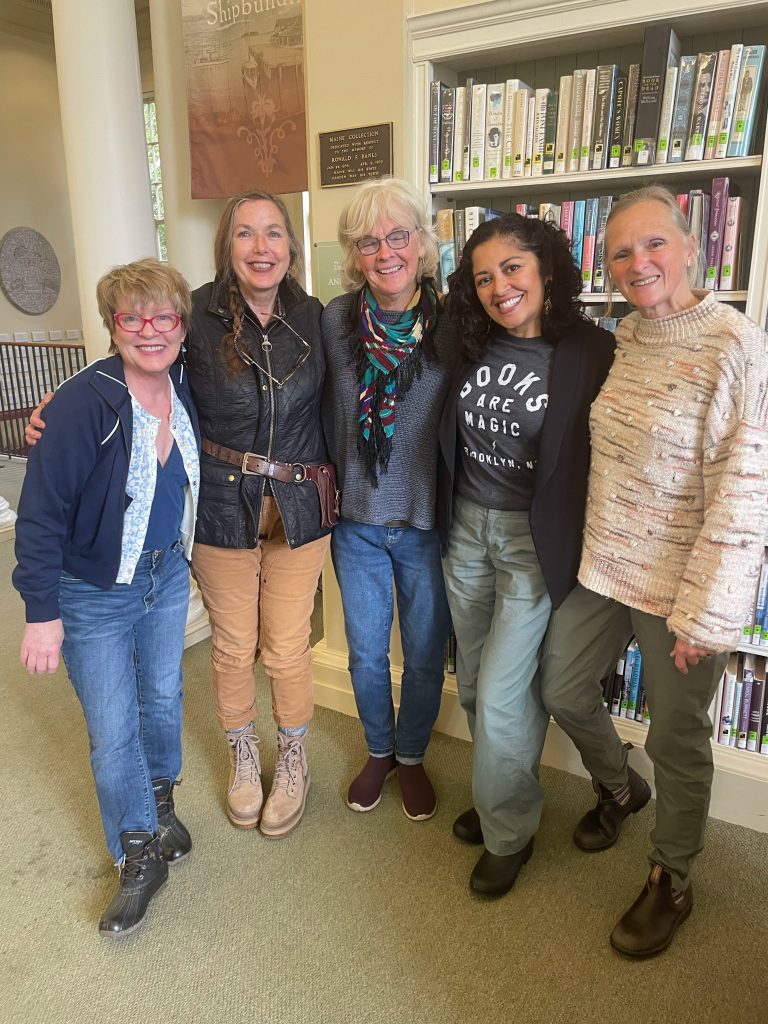
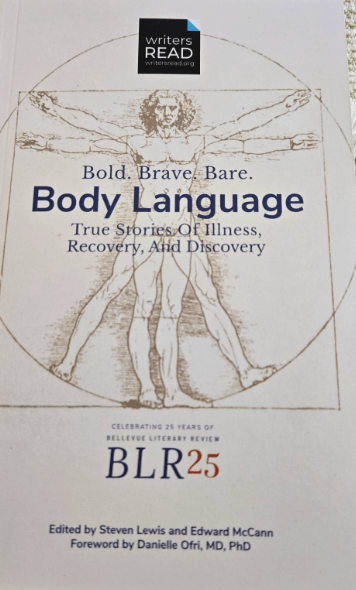
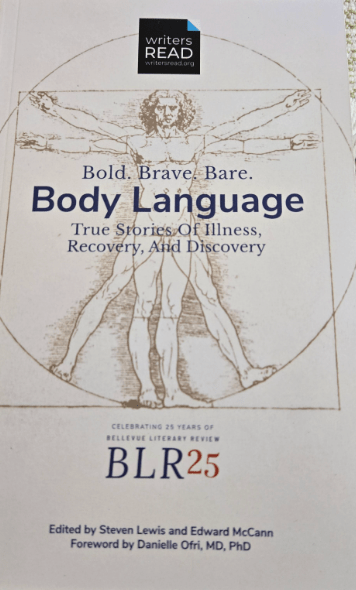
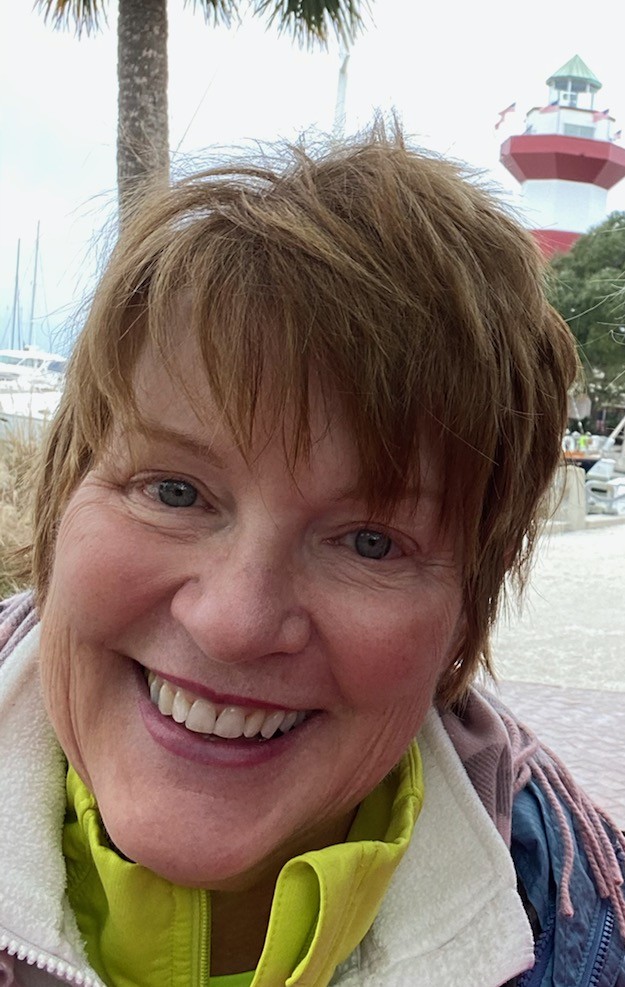
What a treat it was to see Beth Ayotte, a former student from my first class, a couple of weeks ago and to hear that her essay “Hang Loose” was accepted for publication in an anthology celebrating 25 years of the Bellevue Literary Review.

Of finding Writers Read, Beth writes:

“My journey with this publication began in 2024 when I volunteered at the ‘Lit Fest’ sponsored by Maine Writers & Publishers Alliance. I met a woman there whose 650-word true story had been chosen as one of the top ten submissions to Writers Read, so she was invited to read it onstage in NYC. She encouraged me to submit my work and even offered to drive me to the city if I achieved the same success. “Hang Loose,” my first attempt, wasn’t in the top ten, but it was chosen to go into this anthology. May I suggest you keep pushing forward and be adventurous.”

Writers Read presents live readings for their podcasts and is interested in short personal essays. Beth lives on the southern coast of Maine with her cat Moon Shadow who loves to cuddle. She has written about the death of her son, smoking cigarettes at five years old, and is working on a memoir.  Her work has been published in Down East Magazine, The Lifelong Learning Institute Review, and Months to Years.

Writers on Not Writing: Catharine H. Murray and Sarah Boone

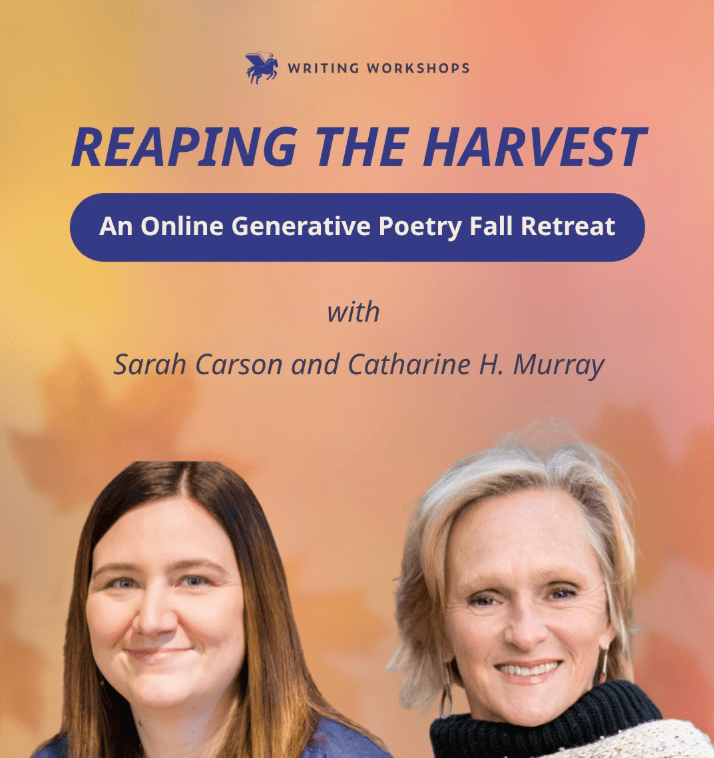
I am delighted to be a featured writer this month at The Masters Review.

“Writers on Not Writing” is curated by Jen Dupree, assistant editor at the Master’s Review and fellow Stonecoast MFA graduate (find her at www.JenniferDupree.com) A monthly post of short essays, the blog features authors’ answers to “what writers do when they aren’t writing, and how those pursuits affect the return to the page.”

To read, click the link below. Or just scroll down.

“How’s your writing going?” It’s the question my friends often ask, a generous invitation to talk about what they know is my passion, what fills me up, and in the past, what felt like my lifeline to sanity. But these days hearing that question makes me want to look away, stuff my hands in my pockets and shrug. Instead, I smile brightly and say my current memoir is coming along “very slowly.” This is code for I’m not doing much creative writing at all these days.

Instead, I’m spending a lot of my time editing other people’s writing. I love the work. I love the relationships that develop between my clients and me. I love the sense of accomplishment when I see their writing improve over time. I love the satisfaction I get from sharing what I know and gaining more confidence in my expertise as the years go by.

When I was young and felt like a bit of a failure in the career department of my life, I used to watch people reading packets on airplanes and wonder if they were editors. I used to think, “I could do that.” I knew I compulsively critiqued in my mind everything I read. I knew I was good at grammar and organization. Now, decades later, I still have to pinch myself sometimes when I tell people I’m an editor. It sounds so adult, so professional.

For decades, I couldn’t not write. Desperate to hold onto the experiences that I suspected would disappear with time, to process the emotional challenges I lived with, I produced thousands of pages of raw material. But I was terrible about revision and publishing, almost never finishing and sending any pieces out into the world. When I felt bad about this, I told myself someday I’d be in an editing mindset, that at the time I needed to just write, just process, and eventually I would shape the writing into something for others.

Nowadays that need to hold onto life, to record the moments of poignant beauty has receded. Perhaps now I rest assured that every day will reveal some treasure. And it seems I have reached the point I imagined I would: I just want to edit. I know that reading and commenting on other people’s writing has strengthened my ability to revise my own work. How many times have I written these margin notes in others’ manuscripts: “This summary would be great as a short scene… I would love to see this rendered in dialogue… I can’t see this character. More description please.” Observing what’s so often missing in early versions of others’ work has made it easy to see the same in my own drafts. The hard part, of course, is sitting down to do the work required to fix it.

Which brings me back to not doing much of my own writing. Writing is hard. It requires looking at who we were in the past with all our flaws. I stalled out in my memoir a while back when I got to the part about my crumbling marriage. I don’t want to go back there. I’d rather play pickleball, clean my house, go for a walk in the winter sunshine. Is it okay to let what happened go and simply enjoy where I am now? Am I abandoning my creative spirit? I don’t know, but just as I did when I was hard on myself for not editing, I tell myself now that I might be doing the right thing right now. I tell myself that editing is creative, that revision is writing. And that it’s okay to go slow, to allow my writing to be something else right now.

Catharine H. Murray

Peter Welch Reads in Kennebunk

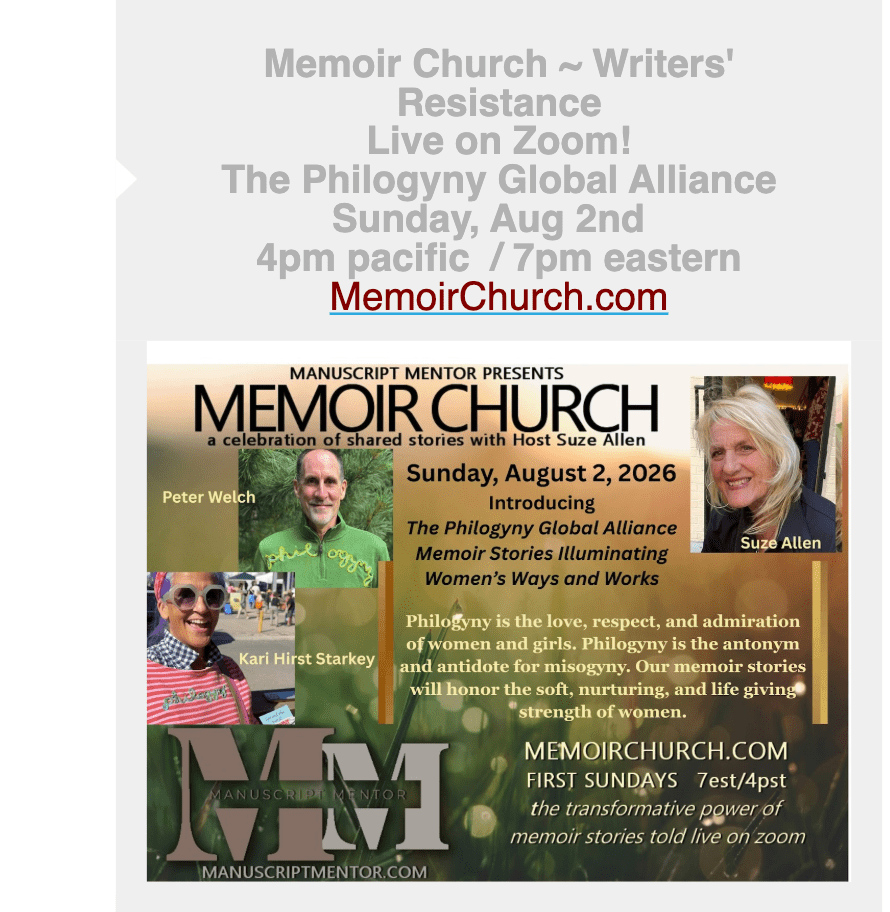
I am delighted to announce that the inimitable Peter Welch, friend and former student, will be reading an excerpt from his memoir Kiss the Ground: A Maine Boy’s Life next Saturday. One of the Ten Piscataqua Writers featured in the 2026 Watershed Anthology, he will be joined by three other authors reading their work and signing books.

Joining the Conversation

For over a decade now I have been teaching people how to use writing as a way to heal, to give voice to the stories that have been waiting inside. When we allow ourselves to write, we get in touch with, nurture and listen to parts of ourselves that may have been forced into hiding long ago. The result is the metabolism of our experiences to help us move forward into living brighter and more powerful lives.
 
Writing to heal ourselves is only the first step in the process. What comes next is moving these stories out into the larger world where they can work their magic on others. When stories are shared, readers feel seen, understood, less alone. And by sharing our stories publicly we place ourselves where we belong: firmly standing in the collective conversation. Despite internal recordings that suggest otherwise and might be running on repeat, each of us has a right to speak and be heard.
 
The courageous act of sending our work out into the world moves us out of shame and fear and feeling small. And when we let go of our stories and poems, we are trusting that they will find their way  into the hands of those who need to read them as much as we needed to write them.
 
But how do you create a collection? How do you decide which of your pieces are right to share, which stories you want to tell?
 
I will answer these questions and more in an interactive, online workshop Sunday November 9th from 1 to 4 PM EST. In Create A Collection, whether you are putting together a book of personal narrative pieces, poems, short stories, or a full length memoir, I will lead you through prompts and exercises that will help you find structure and vision for your collection. We will practice techniques for revision and how to make your inner critic work for you instead of against you.
 
Click the link for more information.
 
(The option to join in an additional hour of personal feedback on your work is currently available.)

And if you’re in the area this Sunday afternoon, October 19th, stop by to say hello and visit one of Portland’s hidden gems, the library at Mechanic’s Hall for BACK TO THE BOOK FAIR. I’ll be there.

Finally, on Tuesday, November 18th at 6 PM I’ll be giving an author talk at the South Portland Library.

Hope to see you in the coming month!

5-Week Summer Writing Workshop Starts July 11th

Join a small group of writers for a five-week online series as we push the boundaries of our own creative urges through the magic of form. Starting on Friday, July 11th at 1 PM EST, this weekly two-hour workshop will provide immediate feedback on your short prose or poetry pieces along with that essential element many of us require: deadlines and accountability.

The forms are fun, the atmosphere supportive, and the positive effect of an assigned framework for your work will surprise you. Partial Scholarships available. To learn more and register, click here. Enrollment capped at 10, so register soon.