Winter Writing by Joy Krinsky Published in HerStry

I am pleased to share this work by memoir student Joy Krinsky. The essay was first published in the current issue of HerStry, an online platform empowering women through stories.

Joy writes:


This is my second essay published. I am grateful to HerStry for turning out to be a great home for these early writings. And to Catharine for continuing to support, encourage and nurture my work.

One of the personal benefits of having pieces published is that I find myself far more comfortable reading the work to acquaintances, family … and strangers! I have been fortunate to find a community of writers and readers at the Literary Salon in Brunswick Maine that allows me to share my work and appreciate the work of others. For that, too, I am grateful. 

Cheers, to a new year, to darkness and to light.

Darkest Night

On the darkest dark night of winter, one small light marks the start of the festival.

This darkest night is the longest night, too. In winter, in Maine, daylight can last maybe eight hours—if you’re lucky. And as the moon of the month of Kislev wanes from quarter, to sliver, to new, the Chanukah festival begins.

The first night is marked by blessings and the lighting of the first candle. The first blessing on this and every night of Chanukah praises God, or Adonai, or Creator, or the Spirit, who makes us holy by commanding or obligating us to kindle this light of Chanukah. The second blessing goes on to praise the one who performed miracles for our ancestors in their days at this season.

And on the first night, like on first nights of other festivals, an added blessing is offered, the Shechecheyanu, which praises God for granting life, sustaining us, and enabling us to reach this moment.

The addition of one light each night—one candle, one ner—the darkest nights are made brighter. Indeed, the light increases. A symbol and ritual of hope.

There is something physical about the experience of lighting Chanukah candles. By necessity, the family stands close to each other, so that each of us may reach and light their shamash “helper” candle first and, following the blessings, light the night’s candles in each of our respective menorahs. This is one time, more than any time or place throughout the year, when donning my identity of Jewish Mama, I make sure everyone’s head is covered with a kippah.

There is a basket in a small cabinet in the living room where we store kippot. Sometimes the collection grows large, overflowing, unruly, and then I will sort and sift to make a reasonable assortment again. Some are interesting, others meaningful, many beautiful, or gifts, remembrances of a family wedding, or a bar or bat mitzvah.

I have always particularly favored our Bukharian kippot. The Bukharian Jews of central Asia, now heavily transplanted to Queens, NY, create a distinctive style of kippah that is immediately identifiable in shape and design with ornate embroidered decorations. There was a time when the four of us each had our own Bukharian kippah. The kids outgrew theirs. But for many years, David’s Bukharian kippah was his favorite, his “go-to.”

In the later years, his taste and choice of kippah grew simpler. But not just simpler, really the simplest. The most minimal. The kind that fills and has filled the bins in synagogues for generations. Black. Single layer. A mere wisp of weightless cloth to cover one’s head.

I sometimes wonder if that was a portent of his leaving us, leaving our family, our family tradition, the one where he must have so often felt the outsider.

At Chanukah, he would alternate, along with the kids, between earnest participation, sarcastic eye rolling, borderline pyromania, and worst of all—just there to appease and please me.

I don’t know why “just to please Mama” should be the least valued. I suppose we want to pass along our traditions, and “success” is measured by the next generation fully embracing and practicing as we do. But perhaps “success” really is the act of doing things in order to please; whether it be your mother, father, sibling, or someone else.

On the other side of the French doors to the dining room, the food, the gifts, the singing, the spinning dreidel game, everything else awaits.

We are close, we are four close together. Each holding one lit candle, over the small table by the window. Lined with aluminum foil, always aluminum foil. Each shamash in hand flickering, struggling. In each flame, there is the potential for great light, as well as devastating destruction.

That closeness, nearness, proximity. A fleeting brush on the back or more deliberate hand on a child’s head or shoulder. Our voices, Baruch atah Adonai. We watch the light, as the ancient Rabbis instructed. We neither read by it, nor create other light. But simply gaze, look at, and observe. We bask in that glow. When the intimacy of the lighting of the chanukiahs and the brightening of the darkness is complete, we are enveloped by the quiet of the room around us. The quieting of the surrounding world.

*

When four became three, when David’s life ceased, with no preparation, abruptly severed from us and our number reduced, a darkness filled the space where a person once stood. The darkness now increased, instead of the light. The absence, David’s absence, was a painful reminder. And not only a mental reminder, but a physical, muscle, deep in my gut memory. Like a phantom limb.

The pain and sadness and emptiness and growing darkness of the first night on that first Chanukah was stronger and more penetrating than I had anticipated. If a passerby had glanced in the window that night the looks on our candle-lit faces would have been of shock, confusion, and fear.

So for our grieving family, to endure this ritual for seven more nights was too much to bear. We did not observe the other nights of Chanukah that first year.

As one year, two years, three years have come to pass, we have once again joined together, three where there once were four. Our rituals remain, we choose kippot from the basket, the meal and gifts and songs await in the next room. We stand close together and light and bless and gaze. My hand gently grazes the backs of my now adult children. And what of that dark space? I struggle with whether the space is empty or full. But of one thing I am certain; the dark space remains, and we hold this space as it holds us.

-Joy E. Krinsky

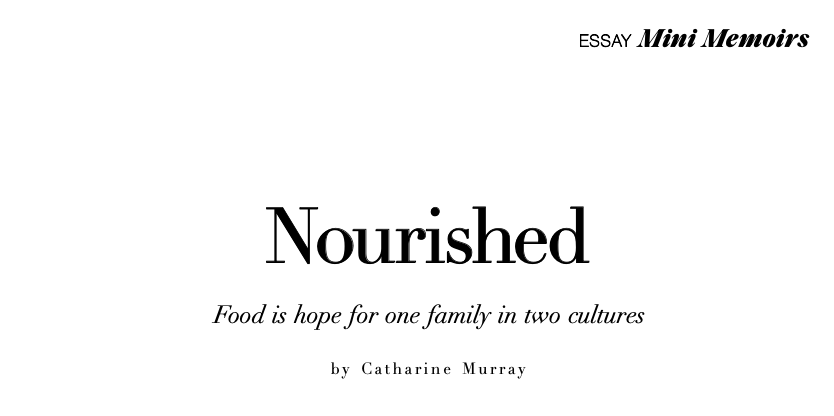
“Nourished” published in December Issue of Decor Maine Magazine

In July the editors at Decor Maine Magazine asked me to write a piece for their Kitchen Issue. What I sent them appeared in this month’s print issue. You can also read it here below. I hope you enjoy it.

The most practical place our family ever lived was a modest two-floor, two-bedroom apartment where the first floor was mostly kitchen. Stove, cabinets, and fridge dominated one wall, and an island in the middle stretched half the length of the apartment with a sink and enough counter space for this mother to cook for her family of five.

When I stood at the island, rear end inches from the stove, hands busy sudsing dishes or rinsing out the juicer, a glance to my right allowed me to assess danger levels as my three boys (ages two to eight) sparred and tumbled in their ninja suits in front of the picture window that, along with a chair and love- seat, defined the living room. At the other end of the island, a small table stood in front of the back door. Both areas doubled as entryways, but the kitchen was the main event, command central.

In those days, a command center was essential. Food had become our biggest hope for getting our middle son well. After two six-week inpatient stays for chemotherapy and a third for the bone marrow transplant, Chan was looking almost as well, and certainly as happy, as any six-year-old kid could be, (if you ignored the steroid-chubby cheeks and shadows under his eyes).

Freed from hospital constraints, he could at last run and tussle with his brothers, the only visible evidence of his cancer a white tube emerging from a small hole above his heart, looped and carefully affixed with a strong metal clip to his red Manchester United shirt. This arrangement kept it from getting pulled out during all the rough and tumble play.

After surrendering completely to a western medical approach eight months previous, we were now left with food as the only aspect of his treatment that felt under our control.

AML M6 is a form of leukemia so rare, the doctors in Thailand who diagnosed it couldn’t give us odds on his recovery. They could only tell us it was serious and that we would need to leave immediately from our home beside the Mekong River to seek treatment in the US.

Days after diagnosis, we flew across the Pacific to begin a life orbiting around Seattle Children’s Hospital. On nights I stayed with Chan (hospital rules: only one adult each night—a sudden end to the family bed we had always shared), my husband read all he could find about the best diets for cancer. From among so much conflicting advice, he decided steamed broccoli and vegetable juices were the winners and showed me which pressure cooker and Champion Juicer to purchase.

Command central was where we kept the pill organizers. After the transplant, Chan required 36 pills per day. At age six, he was an expert at not only watching the blood drawn from the vein in the crook of his elbow while keeping up a lively conversation with whichever new phlebotomist was working, but also at swallowing pills. Cheerfully drinking bitter juices became yet another of his superpowers.

It all seemed to be working. The play, the laughter, the broccoli, the love. Chan was strong and healthy. The doctors were impressed.

Then one day as I was chopping more carrots and celery for juicing, the phone rang.

“Hello, this is Crystal.” Our contact nurse from the Hutchinson Center. “I have some news for you.”

“Yes?” I waited, not knowing whether to hope or worry in that tiny space of time before her next sentence. I heard a delay, long enough for an inhale.

“Chan’s last draw revealed a high concentration of blast cells.”

I felt the familiar impatience and discouragement from not knowing how to interpret these medical facts forever being reported to me. WBC, RBC, platelets, blasts. Preoccupied at home with trying to keep a toddler, a deadly illness, and the rising fear in my heart all under control, keeping up on numerical blood count ranges was beyond my mental, emotional, and energetic capacity. “What does that mean?” I am ashamed to recall that I didn’t try to mask my irritation.

Another pause. Longer this time. “It means the cancer is back. It means you and your husband need to come in to meet with the doctors.”

It meant, we found out the next day, there was nothing more they could do for Chan. He had, they said when pressed, no more than a few months to live.

The best they could offer was to “make the rest of his life comfortable.” This, we found out, again by pressing them for specififics, translated to transfusions and morphine and death in their good, clean hospital for my sweet, strong boy.

That night, my husband convinced me this was not a good plan. The next day, we obtained the doctors’ blessings to return to Thailand, where we would fight for Chan’s life with meditation, vitamins, love, family and food.

***

A week later, we were back in our home on the banks of the Mekong River. There, in the local style, our kitchen consisted of no more than a pair of burners connected to a propane tank, small refrigerator, slab of tree trunk and massive cleaver, bamboo steamer for cooking sticky rice, and cabinet for dishes. Outside the back door stood a sink that drained out onto the cement floor and across to the gutter that ran the perimeter of the yard. The kitchen was minimal because people there rarely kept food stored at home. Instead, food was purchased fresh from the morning market at the center of the village each day.

The market opened at 2 a.m. Our neighbors on each side rose soon after midnight to prepare their carts and wares. Every afternoon, the grandfather on one side of us sat beside a small fire in the outdoor kitchen, puffing on a fat homemade cigar and slowly turning a pig’s head over the smoke, while the grandmother ground pork and stirred meat and spices in a huge wok over the stove. In the dark of early morning, they snipped apart the sausage links strewn from the rafters and carried them up the dark street.

The young couple and mother-in-law on the other side of us rose at 2 a.m. to load and roll their metal cart up the lane, leaning together to push it up the hill, huge woks clanking against the propane tank required to boil the oil to fry and puff the hundreds of triangles of rolled-out dough into hot greasy mouthfuls of chewy air for customers.

Our first morning back home, after hearing the neighbors leave, I dozed under the mosquito net until the boys stirred beside me a little before sunrise. Waking quickly, they began their morning routine of cuddles and laughter and urging me and daddy out of bed.

“Let’s go, Mamma! I want pa tong ko!” The doughnuts.

“I want num dtao hoo!” Homemade and heavily sweetened soy milk.

“I want sang kaya!” Coconut cream jellies steamed in banana leaves.

So many foods they loved and had missed for nearly a year, the knew now waited only blocks away. At the market we walked together along muddy dirt paths where women presided over stalls illuminated by strands of naked light bulbs. Thick, dark squares of pumpkin bars glistened with a sheen of coconut cream. Heaps of ruby red mangosteen bristled dark spines like strange sea creatures. Pyramids of banana leaf packets steamed out aromas of wild mushrooms, Mekong fish and kafir lime leaves. Servings of stew rich with gamey meat, dark leaves, and orange jungle roots sloshed awkward against the constraints of rubber bands expertly twisted around the simple plastic bags that held them.


It seemed everyone we met beamed at us, shouting bright greetings after our absence. Nine months is a long time to be away after years of regular visits to their stalls. The vendors smiled at all of us, but especially at Chan. I must have looked like a ghost then, 20 pounds lighter than when we’d left, lips cracked from forgetting to drink water. It was as if the strength that went into Chan’s body came out of mine. I know by the way they beamed at him and then glanced at me, they saw it too.

Women grabbed Chan’s shoulders, holding him at arm’s length and squeezing tight. “Kengleng dee, nah?” So strong, you are, yes? Their unapologetic touch, bold words, so much encouragement, kindness felt like islands of rest I clung to in a rushing river of worry. They say he looks good. Maybe he’s going to be OK.

And whatever we bought, whether it was a half kilo of peanuts scooped out of a hot wok, a dozen skewers of pork sizzling over hot coals, or a bag of doughnuts snatched from boiling oil, every vendor added something extra as they handed us our purchases, gifts of nourishment, gifts that seemed to say, We are so happy for you. Keep going. Don’t give up. Eat. Be well. ▪

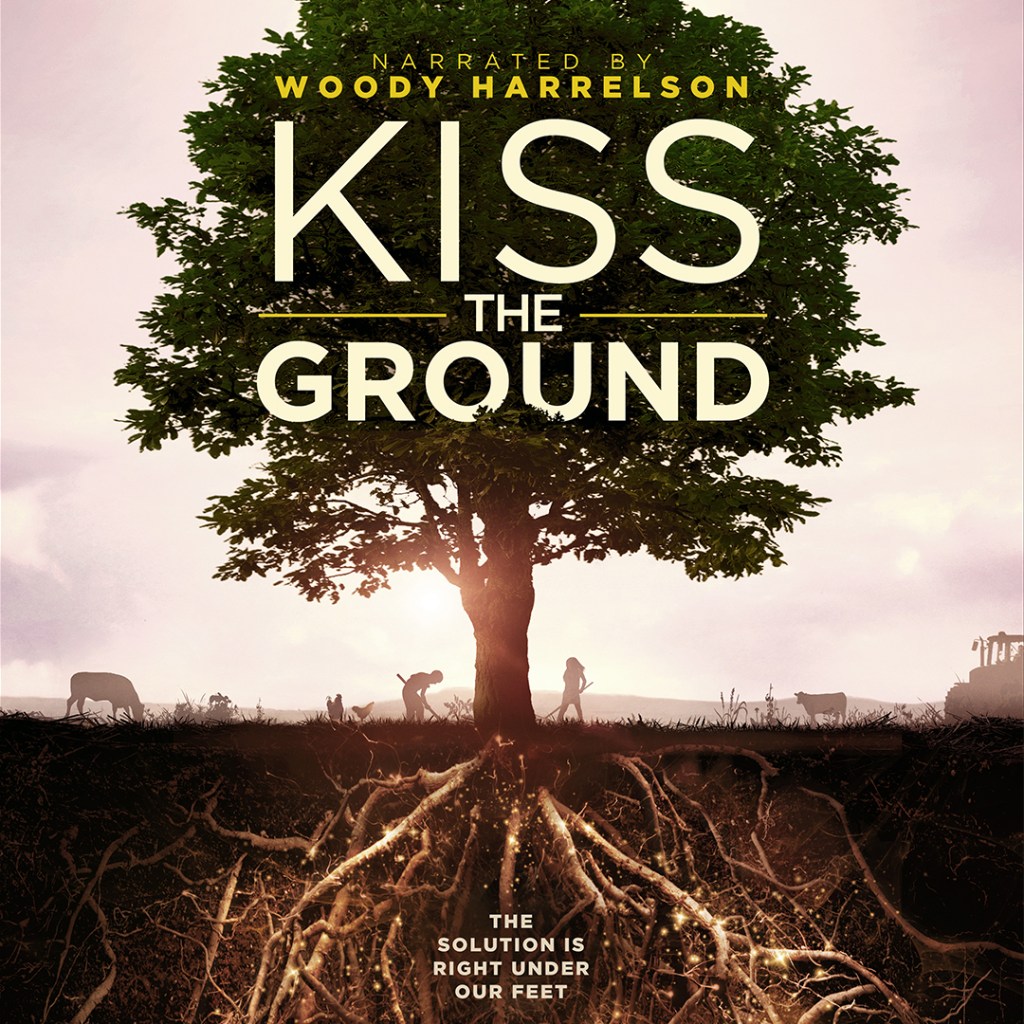
Kiss the Ground: Wonderfully inspiring and empowering movie about climate change. Free to watch on Netflix

I saw this last weekend at a watch party in Taos and was pleased to learn about carbon sequestering and find hope about saving our planet. Josh and Rebecca Tickell did an amazing job directing and bringing in excellent authorities to explain and educate. Beautiful documentary. Click here to stream free on Netflix. Click here to visit the site and find out how to take action.

Geraniums

Now, years later,

it’s the small things

that devastate

defiant red

geranium petals shivering

frail and stubborn

in summer wind

that shakes their pithy stalks

others balance above,

already black or wilting pink

but holding on

the way my six-year-old niece

I haven’t seen since Christmas

hefts plastic bags sagging with weight

of milk and nectarines,

strips of handles biting into

her determined fingers

as she looks up at me

and says with utmost gravity

“I lost two teeth”

frowns down her lip to reveal

the gap between

where adult tooth’s jagged line

white enamel peaks

emerge from red ridge of

tissue-cushioned bone

the way today as I swam

in water that never refuses

my body with its heart’s pain

both niece and nephew crowded

toward me sputtering laughter  

attacking with their water guns

so that

I remembered what a

good mother I once was

and how I loved it

then

when three sons

were all still mine.

So today sadness

swims inside me

so that I look on,

its depth

and weight still surprising.

But now I know there is nothing

to do

but let it

flood and swirl

unchecked

unstoppered

rising

until everything is saturated

and the levels

drop and

it drains away again.

— Catharine H. Murray, 2013

On Halloween, a time when creativity and self-expression are at play, consider joining the next round of LITTLE FRANKENSTEINS.

This time of year marks the beginning of turning toward the fertile ground of winter darkness to delve into the richness of our own creativity. Celebrate your own process by joining LITTLE FRANKENSTEINS , the prose and poetry online workshop Sarah Carson and I are teaching together Fridays from 1 – 3 PM EST. There are still a few spots left in this 5-week series beginning this week on November 3rd.

This small group workshop class focusses on the short form, with one form assigned each week to help you create a piece of prose or poetry to bring to class the following week for revision and improvement. During the first five weeks, I have been impressed by the way this format allows for surprisingly creative and compelling pieces of writing to come into the light.

I hope you will join this lovely group of writers. For more information and to register, click HERE.

Feel free to contact me with questions about the class.

AND HAPPY HALLOWEEN!